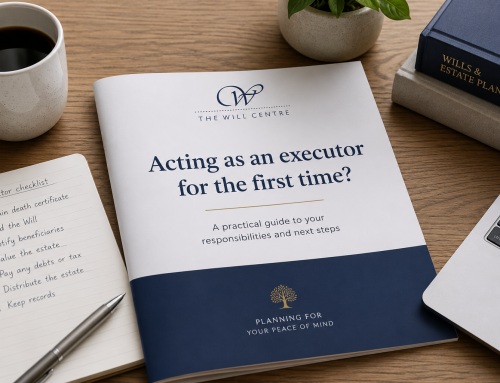

Following the death of a loved one, families are often faced with a number of practical and legal responsibilities. One of the most common terms people encounter during this process is probate.
If you have been named as an executor in a Will or are helping to administer a loved one’s estate, understanding probate is essential. While the process can sometimes appear complicated, understanding what probate is and when it is required can help reduce uncertainty at an already difficult time.
This guide explains what probate is, how it works, when it is needed and what responsibilities fall upon executors and administrators in England and Wales.

What Is Probate?
Probate is the legal process of administering a person’s estate after they die.
The estate includes everything the person owned, such as:
- Property
- Savings and bank accounts
- Investments
- Personal possessions
- Vehicles
- Business interests
It also includes any outstanding debts or liabilities.
Where a valid Will exists, the executor named in the Will will usually apply for a legal document known as a Grant of Probate. This document gives the executor authority to deal with the deceased’s assets and carry out their wishes.
If there is no valid Will, a close relative may need to apply for Letters of Administration instead. The person administering the estate is known as the administrator rather than the executor.
Is Probate Always Required?
Not necessarily.
Whether probate is required depends on the nature and value of the estate.
In some cases, assets can pass automatically to a surviving owner without the need for probate. This commonly occurs where property or bank accounts are owned jointly.
However, probate is often required where:
- Property is owned solely by the deceased
- Financial institutions require proof of authority before releasing funds
- Investments need to be sold or transferred
- The estate is of significant value
Each organisation has its own requirements and thresholds, so the need for probate can vary from estate to estate.
What Is a Grant of Probate?
A Grant of Probate is an official legal document issued by the Probate Registry.
It confirms that the executor has the authority to administer the estate and deal with the deceased’s assets.
Many banks, investment providers and other organisations will require sight of the Grant of Probate before releasing funds or transferring assets.
Without this authority, executors may be unable to progress the administration of the estate.
What Happens If There Is No Will?
If someone dies without leaving a valid Will, they are said to have died intestate.
In these circumstances, the estate is distributed according to the Rules of Intestacy rather than the deceased’s personal wishes.
The Rules of Intestacy determine who can inherit from the estate and in what order.
This can produce outcomes that differ significantly from what the deceased may have intended, particularly where unmarried partners, stepchildren or blended families are involved.
Who Is Responsible for Probate?
Where a Will exists, the executor is responsible for administering the estate.
Their duties typically include:
- Registering the death
- Locating the Will
- Identifying assets and liabilities
- Valuing the estate
- Applying for probate
- Paying debts and taxes
- Distributing assets to beneficiaries
Where there is no Will, these responsibilities usually fall to the administrator of the estate.

The Probate Process Step by Step
Although every estate is different, probate generally follows a similar process.
Step 1: Register the Death
The death must first be registered and the relevant documents obtained.
These documents will be needed when contacting financial institutions and other organisations.
Step 2: Locate the Will
The original Will should be located as soon as possible.
The Will identifies the executors and provides instructions regarding the distribution of the estate.
Step 3: Value the Estate
Executors must identify all assets and liabilities.
This includes:
- Property
- Bank accounts
- Investments
- Pensions
- Personal possessions
- Outstanding debts
Accurate valuations are essential for both probate and inheritance tax purposes.
Step 4: Calculate Any Inheritance Tax
Some estates may be subject to inheritance tax.
The executor is responsible for ensuring any relevant tax forms are completed and submitted.
In certain cases, some inheritance tax may need to be paid before probate can be granted.
Step 5: Apply for Probate
Once the estate has been valued and the necessary information gathered, an application can be submitted to the Probate Registry.
Following approval, the Grant of Probate will be issued.
Step 6: Collect Assets
The executor can then collect funds from banks, sell or transfer investments and deal with other assets held within the estate.
Step 7: Pay Debts and Liabilities
Any outstanding debts must be settled before beneficiaries receive their inheritance.
This may include loans, utility bills, credit cards and professional fees.
Step 8: Distribute the Estate
Once all liabilities have been settled, the remaining assets can be distributed to beneficiaries according to the Will or the Rules of Intestacy.
How Long Does Probate Take?
One of the most common questions executors ask is how long probate takes.
There is no fixed timescale.
Many straightforward estates are administered within six to twelve months, although more complex estates can take considerably longer.
Factors that may affect timescales include:
- Property sales
- Inheritance tax matters
- Overseas assets
- Business interests
- Missing beneficiaries
- Disputes relating to the estate
Every estate is unique, which means probate timescales can vary significantly.
How Much Does Probate Cost?
The cost of probate depends on the complexity of the estate and the level of professional support required.
Potential costs may include:
- Probate application fees
- Valuation costs
- Legal fees
- Estate administration fees
- Property-related expenses
Many executors choose to seek professional guidance to help ensure the estate is administered correctly and efficiently.
Can Probate Be Challenged?
While probate itself is not usually challenged, disputes can arise in relation to the estate.
Examples include:
- Claims against the estate
- Disputes regarding the validity of a Will
- Concerns about executor conduct
- Disagreements between beneficiaries
Obtaining professional advice early can often help avoid disputes escalating unnecessarily.
Common Probate Mistakes
Executors often have little or no previous experience of administering an estate.
Common mistakes include:
- Distributing assets too early
- Failing to identify all liabilities
- Missing tax obligations
- Poor record keeping
- Misunderstanding executor responsibilities
Because executors can sometimes be held personally liable for mistakes, professional guidance can provide valuable reassurance.
When Should You Seek Professional Probate Advice?
Many estates can be administered without professional assistance. However, advice may be particularly beneficial where:
- The estate includes property
- Inheritance tax is payable
- Business assets are involved
- There are overseas assets
- Family relationships are complex
- Beneficiaries disagree
- The executor feels unsure about their responsibilities
Professional support can help reduce stress and ensure the estate is administered correctly.
Need Probate Advice?
Administering an estate can be time-consuming and emotionally challenging, particularly when coping with the loss of a loved one.
At The Will Centre, we provide clear, compassionate guidance to executors, administrators and families throughout Plymouth, Devon and the surrounding areas. Whether you need assistance with a Grant of Probate or support with the wider administration of an estate, our experienced team is here to help.
To learn more about how we can assist, visit our Probate Services page or contact our team for practical advice tailored to your circumstances.